
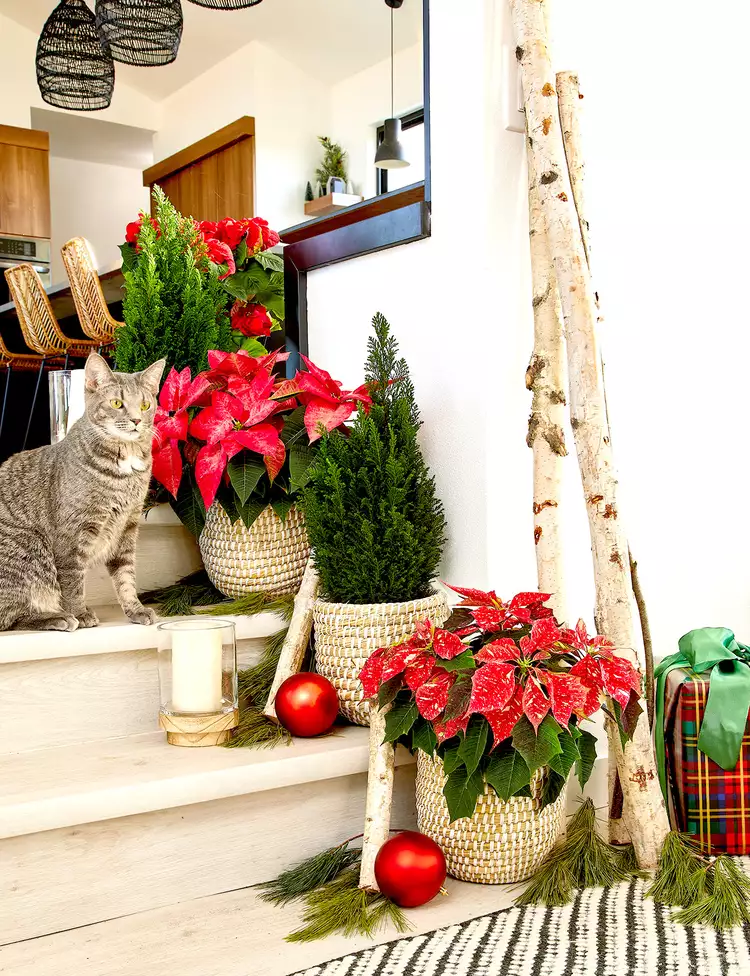
Poinsettias are the Christmastime superstars of the plant world. But there's a long-held notion that poinsettia poison danger should concern parents and pet owners. You've probably heard that the festive plant is harmful should children or animals nibble on the leaves. It's easy to believe this idea, considering that the color red in nature often signals danger. However, plenty of research by experts in many fields proves that poinsettias aren't poisonous, so let's bust this myth and set the record straight.
Poinsettia Poison—Is It Real?
There are heaps of delicious things to eat around the holidays, but poinsettia leaves aren't among them. The plant tastes terrible. If a child or pet happens to take a bite out of a leaf, it's likely they'll spit it out and not be tempted to nibble any more. But even if they do swallow the leaves, it's usually nothing to worry about.
"Poinsettias contain a milky irritant sap," says Dr. Lisa Murphy, associate professor of toxicology at the University of Pennsylvania School of Veterinary Medicine. "The sap can cause some mild discomfort." That discomfort can include irritated skin and upset stomach, but there is no evidence of long-term effects from eating poinsettias.
Poinsettia Poison History
So where did this poinsettia poison tall tale come from? Researchers at The Ohio State University surmise that it started with an unsubstantiated report in 1919 of a small child dying after chewing on a poinsettia leaf. In 1971, experts at Ohio State tested the toxicity of poinsettias by feeding parts of the plants to rats. The researchers reported their findings in the journal Toxicon, stating that the rats "when given extraordinarily high doses of various portions of poinsettias show no mortality, no symptoms of toxicity, nor any changes in dietary intake or general behavior pattern." Bottom line: poinsettias are not poisonous!
What to Do if Your Dog or Cat Eats Poinsettia
While a few houseplants can be dangerous to pets, poinsettias won't cause lasting harm. Dr. Murphy says an upset stomach is the general symptom of pets snacking on poinsettia leaves and stems. "Your pet might be quieter than usual or lack appetite. Vomiting is also possible." Your pet's upset stomach is usually temporary. "The good news is, the symptoms generally go away on their own without any special care."
"Sometimes pets need a little help to recover," Dr. Murphy says. "Withhold food and water for 1 to 2 hours to give the stomach an opportunity to settle." After a couple of hours, offer food and water. "Remember, you know your pet best. Pets, like people, have individual sensitivities. Expect pets with sensitive stomachs or underlying conditions to be a bit more sensitive." If your pet is still vomiting or experiencing diarrhea 12 to 24 hours after first showing symptoms, call your vet.
What to Do if Your Child Has a Reaction
Poinsettia's irritating sap can cause a mild skin rash. Wash the area with soap and water and apply a cool compress to ease itching. If a child eats a poinsettia leaf, clear out their mouth and rinse thoroughly with water. Some people are more sensitive to poinsettia plants than others. Those with latex allergies and those allergic to avocados, bananas, chestnuts, kiwis, or passion fruits might have a greater chance of being allergic to poinsettia plants. In case of a severe reaction, promptly seek medical attention.
How to Safely Enjoy Poinsettias
Avoid the hassle of stomach troubles and nibbled plants by thinking like an explorer. "Pets, young animals especially, are just like kids," Dr. Murphy says. "They explore by putting things in their mouth." This exploration is heightened around the holidays when the decor and activity in homes change. "Be mindful during the holidays when we're all so busy. Pets often think any new thing that comes into the house is surely for them, and they are naturally curious." Enjoy your poinsettia by setting it out of reach of curious pets and toddlers.