
Don’t let a lack of space discourage you from a homegrown vegetable harvest this season. There are lots of small vegetable garden ideas that can help you maximize your space and fill your kitchen with fresh, delicious produce. Though some vegetable plants can eat up large swaths of a garden plot, others can thrive on minuscule plots, in containers, and in places where there seems to be no space for a garden at all. Use these tips and ideas to put every bit of space you have to use.
Consider the Essentials for Growing Vegetables
Before digging into the best small vegetable garden ideas to use in your space, there are a few factors you'll need to consider. No matter the size, every vegetable garden needs sunlight, water, and soil for plants to grow, flower, and fruit successfully.
Most vegetables require at least 6 hours of direct sunlight daily so be mindful of shadows cast by trees or buildings over your growing space. Nearby water is especially important if the vegetable garden is planted in pots. Containers dry out quickly and demand to be watered daily during hot weather. Finally, high-quality potting soil or garden soil is essential for a good harvest. Soil delivers nutrients to plant roots, holds water until the roots absorb it, and provides stability for the plant.
1. Start Early and Plant into Fall
Grow more in a small space by expanding the growing window. Plant radishes, peas, lettuce, and spinach in early spring as soon as the soil can be worked. These cool-season crops will grow and be ready for harvest before the warm-season crops, such as peppers and tomatoes, take up valuable real estate. Repeat the process in late summer. Plant cool-season crops in open pockets of soil and harvest late into fall and even early winter in some locations.
2. Partner with Shrubs and Perennials
Vegetables don't have to be grown in separate veggie-only growing spaces. Add vegetables to full-sun shrub and perennial beds. A front border or foundation bed can be a great spot to grow vegetables. Fruiting plants even add color and texture to the planting scheme. Pair edibles with shrubs and perennials with similar soil and water needs, and you’ll have a delightful match that is both pretty and productive.
3. Plant a Container Garden
Almost every vegetable plant will thrive in a pot. Choose a large container—the best pots contain at least five gallons of soil and are at least 18 inches deep and 24 inches wide. Increase your harvest by increasing the number of pots. Group the pots together near a water source for easy care.
4. Maximize Production Space
When choosing vegetables for your small garden, look for plants that have a high rate of fruiting compared to the growing space they demand. Pole beans, for example, are more productive in a small space than bush beans because they can scramble up a trellis and produce fruit along the way. Eggplant, peppers, and bush cucumbers can also be exceptionally productive in a small space. Avoid melons and squash.
5. Build a Raised Bed
Raised bed gardens can turn an unplantable spot like a driveway into a garden oasis. Use untreated lumber or other leach-free material such as brick, stone, or aluminum to create a planting box at least 18 inches tall. Fill the box with high-quality topsoil and compost in a ratio of 2:1.
6. Pair Cool-Season and Warm-Season Vegetables
Also called succession sowing, this planting method pairs cool-season crops with warm-season crops to share garden space. It works like this: when a cool-season crop, such as lettuce, is nearing maturity, a warm-season crop, such as beans, is planted beside the almost-ready-to-harvest crop. When the lettuce is harvested, the beans take over the growing space.
A few great planting partners include broccoli and tomatoes, peas and peppers, and lettuce and beans.
7. Grow Vertically
Prevent vegetables from sprawling on the ground and maximize in-ground planting space by training vegetables up a trellis. Trellising is especially important when growing tomatoes in small spaces. Put a trellis or tomato cage in place near the plant at planting time. Use strips of cotton cloth to loosely tie stems to the trellis as necessary. Cucumbers, peas, and climbing beans produce fruit well on a trellis.
8. Choose Compact Plants
Plant breeders have selected hundreds of cultivars well-suited for growing in small spaces. Plants labeled dwarf, tiny, patio, or compact are usually a good fit for a small space garden. And some vegetables, such as tomatoes, beans, and cucumbers have "bush" types that don't need as much room to grow.
9. Plant a Window Box
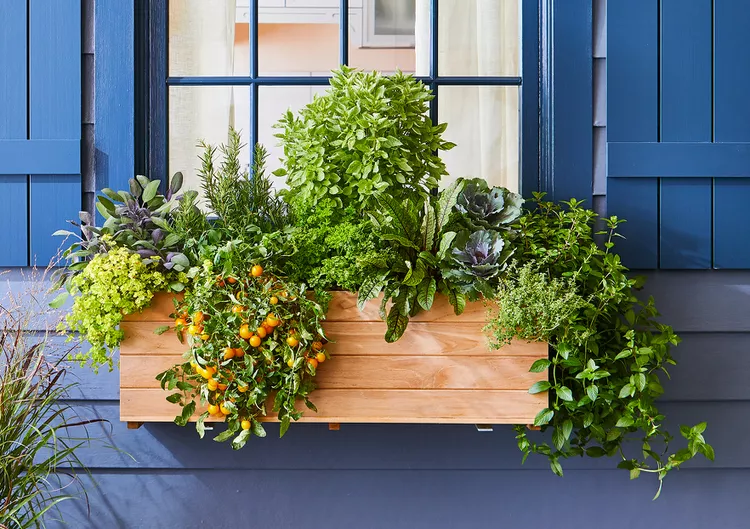
When in-ground planting space is limited, look up! Stock a west- or south-facing window box with greens and radishes in the spring. Plant peppers, eggplant, and herbs in summer, and then enjoy a fall crop of your favorite greens.
Window boxes dry out fast; be prepared to water daily.
10. Plant Dwarf Fruit Trees
From apples to cherries to peaches, many dwarf fruit trees require only a few feet of in-ground growing space or a large (25 gallons of soil volume) container to produce a delicious harvest. Dwarf fruit trees typically grow 3 to 5 feet wide and less than 12 feet tall.
11. Tuck in Herbs
Plant creeping thyme in the space between stepping stones. Nestle parsley at the base of a purple coneflower. Slip rosemary in an opening in a bed of succulents. Plant herbs in pockets of soil throughout the garden. These tough plants thrive in tight quarters, and their flowers help attract beneficial insects to help pollinate cucumbers, peppers, and other veggies.